
Manual pole pruners are vital tools for gardeners, enabling efficient pruning of higher branches. They promote healthy plant growth and structural improvements, offering a practical solution for reaching difficult areas.
What is a Manual Pole Pruner?
A manual pole pruner is a hand-powered tool designed for trimming branches that are out of easy reach. Unlike powered versions, it relies on your strength to operate the cutting mechanism – typically loppers or a saw – extended on a pole. This allows gardeners and landscapers to safely prune trees and shrubs from the ground, avoiding the need for ladders in many situations. They are essential for maintaining plant health and appearance, offering a cost-effective and quiet alternative to gas or electric models.
Benefits of Using a Manual Pole Pruner
Manual pole pruners offer several advantages. They are lightweight and easy to maneuver, requiring no fuel or electricity, making them environmentally friendly and quiet to operate. They provide a cost-effective solution for pruning, eliminating the expense of gas or batteries. Most importantly, they enhance safety by reducing ladder use, minimizing the risk of falls while maintaining plant health and improving structure.

Types of Manual Pole Pruners
Manual pole pruners come in lopper, saw, and combination styles. Loppers excel at cutting branches, saws tackle thicker limbs, and combinations offer versatile pruning capabilities.
Lopper Style Manual Pole Pruners
Lopper style manual pole pruners utilize long handles with scissor-like blades, ideal for cutting branches up to a couple of inches in diameter. These are particularly effective for general pruning tasks, offering a clean cut that encourages healthy regrowth. The leverage provided by the pole extends reach, minimizing the need for ladders and enhancing safety. Ryobi, among other brands, manufactures reliable lopper-style options, favored for their efficiency in maintaining shrubs and smaller trees. They are a staple for routine garden upkeep.
Saw Style Manual Pole Pruners
Saw style manual pole pruners feature a reciprocating saw blade attached to a pole, designed for tackling thicker branches that loppers can’t manage. These are best suited for limbs exceeding two inches in diameter, providing the power needed for more substantial pruning jobs. They require more effort but offer increased cutting capacity, making them valuable for larger trees. Careful technique is crucial for efficient and safe operation, ensuring clean cuts and preventing damage.
Combination Manual Pole Pruners
Combination manual pole pruners offer versatility by integrating both lopper and saw mechanisms onto a single pole. This provides gardeners with a single tool capable of handling a wider range of branch sizes and pruning tasks. They are ideal for those seeking convenience and efficiency, eliminating the need to switch between separate tools during a pruning session. This all-in-one design streamlines the process.

Key Features to Consider
Selecting a manual pole pruner requires evaluating pole length, cutting capacity, blade quality, and grip comfort for optimal performance and user experience.
Pole Length and Adjustability
Pole length is crucial for reaching desired branches safely from the ground. Consider the typical height of trees you’ll prune; longer poles tackle higher branches. Adjustability is also key, allowing customization for varying heights and terrains. Telescoping poles offer versatility, while fixed-length options provide stability. Ensure the locking mechanism is secure to prevent slippage during use, enhancing both safety and control while pruning.
Cutting Capacity
Cutting capacity defines the maximum branch diameter a manual pole pruner can handle effectively. This specification, usually measured in inches or millimeters, is vital for selecting the right tool. Larger diameter branches require pruners with higher cutting capacities. Consider the types of trees you’ll be pruning; fruit trees often need smaller capacities than larger ornamental trees. Always avoid exceeding the stated capacity to prevent damage and ensure safe operation.
Blade Material and Quality
Blade material significantly impacts a manual pole pruner’s performance and longevity. High-carbon steel blades offer excellent sharpness and durability, resisting wear and maintaining their edge. Some models feature Teflon-coated blades for reduced friction and smoother cuts. Quality blades are heat-treated for increased strength and resistance to bending or breaking during demanding pruning tasks. Regularly sharpening blades ensures clean, efficient cuts and prevents damage to plants.
Grip and Comfort
Grip and comfort are crucial for extended use of a manual pole pruner. Ergonomic grips, often made of non-slip rubber or foam, reduce hand fatigue and provide a secure hold. Adjustable grips accommodate different hand sizes and preferences. Look for pruners with cushioned handles to absorb vibrations and minimize strain during prolonged pruning sessions. A comfortable grip enhances control and precision, improving overall efficiency.
Safety Considerations When Using a Manual Pole Pruner
Prioritize safety with PPE like gloves and eye protection. Maintain awareness of surroundings, avoiding power lines, and utilize proper pruning techniques for secure operation.
Personal Protective Equipment (PPE)
Essential PPE includes sturdy gloves to protect hands from abrasions and sharp blades. Safety glasses or goggles are crucial, shielding eyes from falling debris during pruning. Consider a hard hat when working beneath taller branches, mitigating potential head injuries. Appropriate clothing, like long sleeves and pants, offers further protection against scratches and irritants. Proper footwear provides stability, especially on uneven terrain, enhancing overall safety while operating a manual pole pruner.
Proper Pruning Techniques
Effective pruning involves making clean cuts just outside the branch collar, avoiding flush cuts that damage the tree. Remove dead, diseased, or crossing branches to improve air circulation and sunlight penetration. Angle cuts downward to prevent water accumulation and decay. Prioritize smaller branches first, gradually working towards larger ones. Always maintain the tree’s natural shape, promoting healthy growth and structural integrity when using a manual pole pruner.
Avoiding Power Lines and Obstacles
Safety is paramount when using a manual pole pruner. Maintain a safe distance – at least 10 feet – from all power lines. Be acutely aware of surrounding obstacles like buildings, fences, and other structures. Never attempt to prune branches near electrical hazards. Assess the work area thoroughly before starting, ensuring a clear and safe working environment. Prioritize personal safety above all else during pruning operations.
Maintenance and Care
Regular maintenance extends the life of your manual pole pruner. Cleaning, sharpening blades, lubrication, and proper storage are crucial for optimal performance.
Cleaning and Sharpening Blades
Consistent cleaning after each use prevents sap and debris buildup, ensuring smooth operation. Remove residue with a damp cloth and mild detergent. Sharpening blades regularly maintains cutting efficiency; a dull blade requires more force and can damage branches. Utilize a file or sharpening stone, following the blade’s original angle. Inspect for damage and replace blades when necessary for safety and optimal performance.
Lubrication
Regular lubrication of moving parts, particularly the cutting mechanism and pole sections, minimizes friction and prevents corrosion. Apply a lightweight oil or silicone spray to pivot points and sliding surfaces. This ensures smooth extension and retraction of the pole, as well as effortless cutting action. Avoid over-lubrication, as it can attract dirt and grime, diminishing effectiveness.
Storage
Proper storage extends the lifespan of your manual pole pruner. Clean the blades thoroughly after each use, removing sap and debris. Retract the pole to its shortest length and store it in a dry, sheltered location, away from direct sunlight and extreme temperatures. Hanging it vertically can prevent bending or warping over time.

Top Manual Pole Pruner Brands
Ryobi stands out as a reputable brand, alongside others offering durable manual pole pruners. Choosing wisely ensures quality and longevity for your gardening tasks.
Ryobi Manual Pole Pruners
Ryobi offers a range of 18V Cordless Pole Loppers, specialized for pruning tasks. These tools provide extended reach and convenient cordless operation, simplifying branch removal. Ryobi’s ONE+ system compatibility allows using existing batteries with other tools. They are designed for efficient cutting, promoting healthy plant growth and offering a user-friendly experience. Consider Ryobi for reliable performance and versatility in your garden maintenance.
Other Reputable Brands
Beyond Ryobi, several brands offer quality manual pole pruners. ManualsLib and Manualsdir.ru showcase a vast selection from various manufacturers. Exploring options ensures finding the perfect fit for your needs. These platforms host numerous user manuals and guides, aiding informed decisions. Researching brands and comparing features is crucial for optimal pruning performance and long-term tool satisfaction.

Finding Manuals and Guides
ManualsLib and online databases provide free PDF manuals for various pole pruners. Manufacturer websites also offer downloadable guides and resources for users.
Online Manual Databases
Numerous websites specialize in archiving and providing access to user manuals, including those for manual pole pruners. Manualsdir.ru and ManualLib.com boast extensive libraries with over 700,000 and 832,743 documents respectively, continually expanding through user contributions. These platforms allow searching by keyword, model number, or brand, offering convenient access to detailed instructions, safety guidelines, and troubleshooting tips. Users can often view manuals online or download them as PDFs, facilitating easy reference during maintenance or operation.
Manufacturer Websites
Directly visiting the manufacturer’s website is a reliable method for locating manual pole pruner documentation. Brands like Ryobi typically dedicate sections of their sites to support materials, including downloadable PDF manuals and guides. These resources often provide the most accurate and up-to-date information regarding specific models, safety precautions, and warranty details. Furthermore, manufacturers frequently offer troubleshooting assistance and frequently asked questions sections to aid users.
User-Contributed Manuals
Online communities and dedicated websites often host user-submitted manual pole pruner documentation. These platforms, like ManualsLib and Manualsdir.ru, rely on contributions from individuals who have successfully located or scanned manuals for older or less common models. While verifying accuracy is crucial, these resources can be invaluable when official manufacturer support is unavailable, building a more complete reference for everyone.

Troubleshooting Common Issues
Manual pole pruners can experience cutting difficulties, blade jamming, or pole instability. Addressing these promptly ensures safe and efficient operation during pruning tasks.
Difficulty Cutting
If your manual pole pruner struggles to cut branches, first ensure the blades are sharp and clean. Dull blades significantly reduce cutting efficiency. Check for sap or debris buildup hindering the blade’s movement. Thicker branches may require multiple attempts or a saw-style pruner. Confirm you’re applying sufficient, controlled pressure, avoiding jerky motions that can lessen effectiveness. Consider the wood type; some are naturally harder to cut.
Blade Jamming
Blade jamming in a manual pole pruner often results from attempting to cut branches that exceed the tool’s capacity. Accumulated sap and wood chips contribute to this issue, hindering smooth operation. Regularly cleaning the blades during use prevents buildup. If jamming occurs, carefully release the pressure and remove any obstructing debris before attempting further cuts. Inspect the blades for damage or misalignment.
Pole Instability
Pole instability with manual pole pruners frequently arises from uneven ground or overextension. Ensure a stable footing before each cut, and avoid reaching beyond a comfortable range. Check that the pole sections are securely locked into place before use. Regularly inspect the locking mechanisms for wear and tear, replacing damaged parts promptly to maintain control and safety.

Comparing Manual vs. Powered Pole Pruners
Manual pole pruners offer quiet operation and lower costs, but require more physical effort. Powered versions provide increased cutting power and speed for larger tasks.
Advantages of Manual Pruners
Manual pole pruners present several compelling benefits. They are notably quieter than powered alternatives, reducing noise pollution during yard work. Furthermore, the absence of fuel or batteries translates to lower running costs and environmental impact.
Their lightweight design enhances maneuverability, and they require less maintenance. Manual pruners also eliminate the safety concerns associated with cords or gas-powered engines, making them a user-friendly option for various pruning needs.
Disadvantages of Manual Pruners
Manual pole pruners, while beneficial, have limitations. They demand significant physical effort, especially when tackling thicker branches or extended pruning sessions. Cutting capacity is generally lower compared to powered models, making them less suitable for large-scale projects.
Reaching higher branches can also be more challenging, and the process is slower. Users may experience fatigue, and achieving clean cuts on tougher wood requires greater strength and technique.
Pruning Techniques for Different Tree Types
Manual pole pruners require adjusted techniques based on tree type; fruit trees need airflow pruning, ornamentals focus on shape, and shrubs benefit from thinning cuts.
Fruit Trees
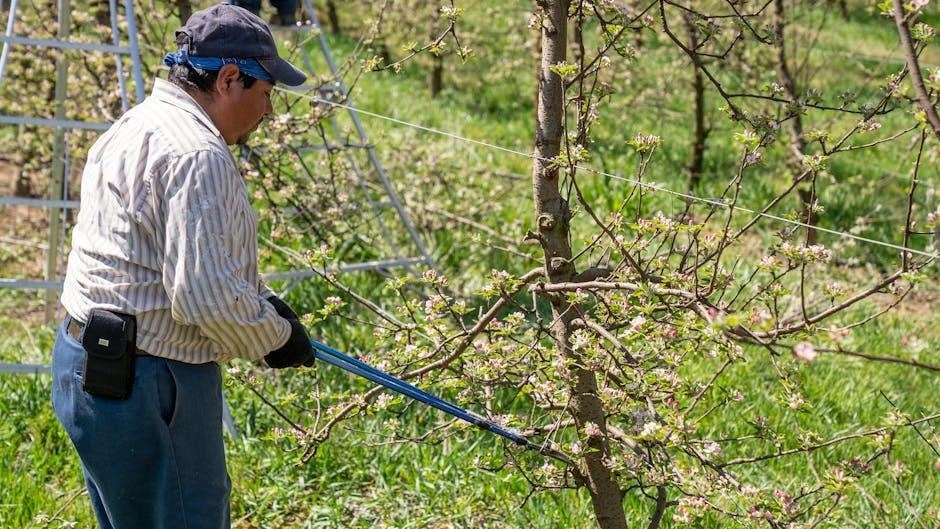
Employing a manual pole pruner on fruit trees centers around maximizing sunlight penetration and air circulation within the canopy. Remove crossing or inward-growing branches to prevent disease and encourage fruit development. Focus on thinning cuts, removing entire branches at their origin, rather than heading cuts which stimulate vigorous growth.
Maintain a central leader structure for optimal fruit production. Regularly prune to control size and shape, making it easier to harvest ripe fruit. Careful pruning with a pole pruner enhances both yield and fruit quality.
Ornamental Trees
Using a manual pole pruner for ornamental trees prioritizes aesthetic shape and overall health. Remove dead, damaged, or diseased branches promptly to maintain visual appeal and prevent further issues. Thinning cuts are crucial for opening the canopy, improving airflow and light exposure.
Consider the tree’s natural form when pruning; avoid excessive topping, which can create weak growth. Regular, light pruning is preferable to drastic cuts, preserving the tree’s beauty and structural integrity.
Shrubs
Employing a manual pole pruner on shrubs allows for controlled shaping and size reduction. Focus on removing crossing or rubbing branches to enhance air circulation and prevent disease. Prune after flowering for spring-blooming shrubs, and in late winter for others.
Maintain a natural shape, avoiding severe shearing that can lead to dense, unhealthy growth. Regularly remove suckers and water sprouts to maintain the shrub’s desired form and vigor.

Where to Buy Manual Pole Pruners
Manual pole pruners are readily available at online retailers and local hardware stores, offering diverse options to suit various gardening needs and budgets.
Online Retailers
Numerous online retailers provide a vast selection of manual pole pruners, offering convenience and competitive pricing. Major platforms like Amazon and specialized gardening websites frequently stock various brands and models. These sites often feature customer reviews, detailed product descriptions, and comparison tools to aid in your decision-making process.
Furthermore, manufacturer websites, such as Ryobi’s, directly sell their products, potentially offering exclusive deals or bundles. Always compare shipping costs and return policies before finalizing your purchase from these online sources.
Local Hardware Stores
Traditional hardware stores remain excellent sources for manual pole pruners, providing a tactile shopping experience. Stores like Home Depot, Lowe’s, and Ace Hardware typically carry a selection of popular brands and models. This allows you to physically inspect the pruner’s build quality and assess its comfort before buying.
Local stores often offer knowledgeable staff who can provide personalized recommendations and answer your questions, enhancing your purchasing confidence.

Cost and Budget Considerations
Manual pole pruners generally range from $30 to $150, with price influenced by pole length, cutting capacity, blade quality, and brand reputation.
Price Range for Manual Pole Pruners
Manual pole pruners exhibit a diverse price spectrum, typically falling between $30 and $150. Entry-level models, suitable for light pruning tasks and shorter reaches, often start around $30-$60. Mid-range options, offering improved durability and extended reach, generally cost $60-$100. Premium models, featuring robust construction, superior blade materials, and advanced features, can exceed $100, sometimes reaching $150 or slightly above.
Factors Affecting Price
Several key elements influence the cost of a manual pole pruner; Pole length and material (aluminum versus fiberglass) significantly impact price, with longer, fiberglass poles commanding higher fees. Cutting capacity, measured by the maximum branch diameter, also plays a role. Blade quality – high-carbon steel versus hardened steel – affects durability and cost. Finally, brand reputation and included features, like adjustable poles, contribute to the overall price point.